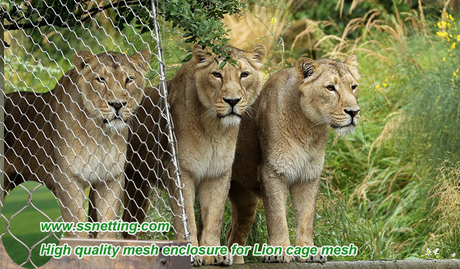
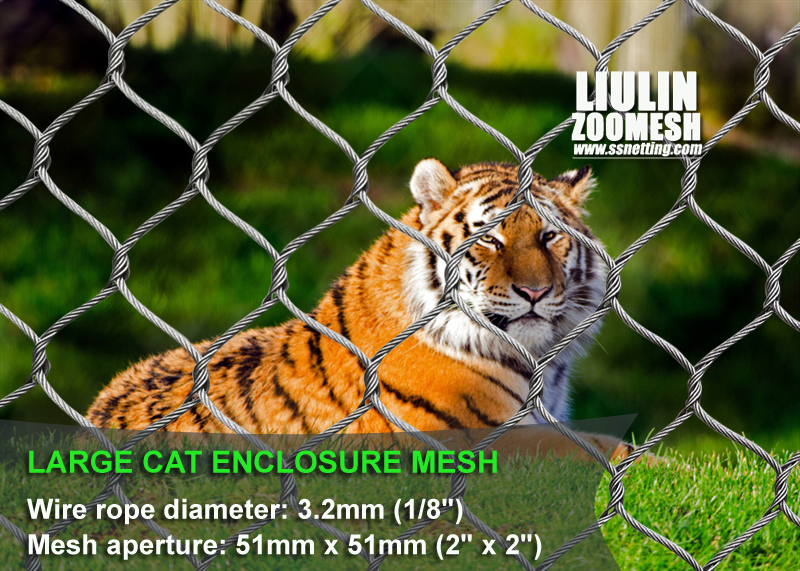
Wildlife animal enclosures place extremely high demands on the strength, toughness, and durability of their fencing materials. A qualified protective net must not only withstand impacts and scratches but also consider animal welfare, visibility, and long-term maintenance costs. Below, we provide feasible selection recommendations from five dimensions: materials, structure, strength indicators, installation details, and maintenance.
Ⅰ. Material Selection Priority: Combining Durability and Corrosion Resistance
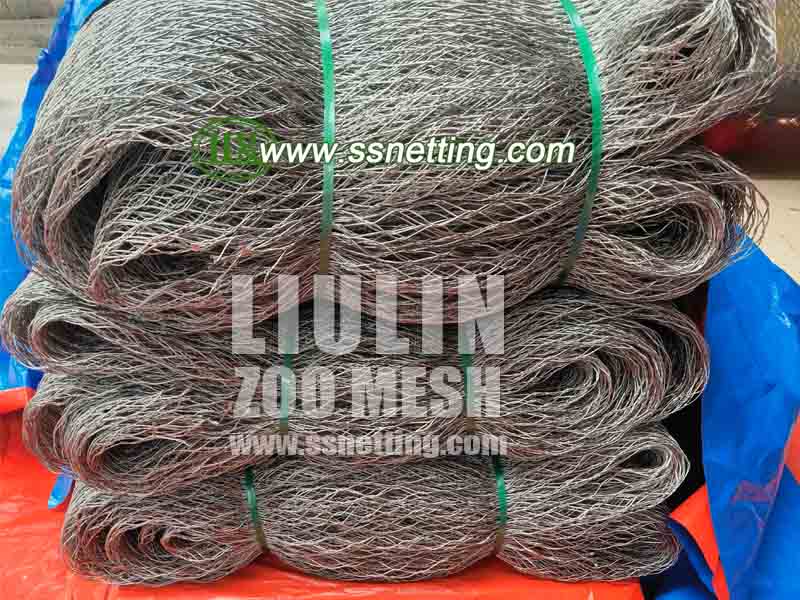
For wild animal protection, high-strength stainless steel wire rope mesh or high-strength galvanized steel rope mesh are the preferred choices. 316/316L stainless steel has a longer corrosion resistance life in humid or coastal environments; hot-dip galvanizing and plastic coating offer excellent cost performance in terms of wear resistance and rust prevention.
Ⅱ. Key structural points: The cable net and weaving method affect its toughness.
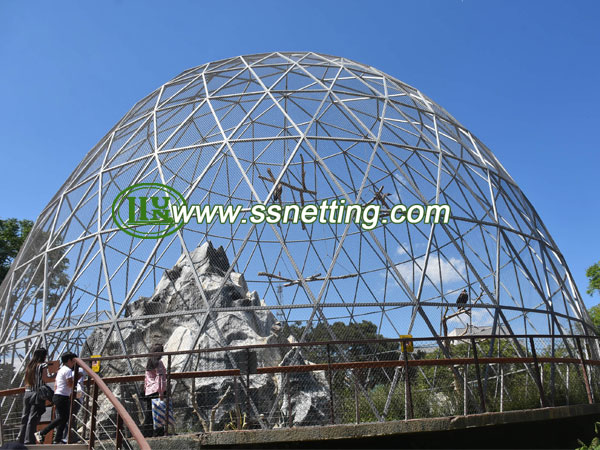
Rope wire mesh, woven wire mesh, and tension mesh each have their advantages: rope wire mesh provide excellent impact resistance and energy absorption through multi-strand winding; woven wire mesh exhibit multi-directional dispersion under stress, offering strong resistance to scratches and localized impacts. Considering the exhibition area requirements, a composite structure (cable net + steel frame) can be used to enhance overall rigidity and redundancy. Note: The type of cable net and weaving method affect its toughness.
During installation, ensure zoo enclosure mesh uniform tension, proper clamping of the pressure sleeve, and the use of anti-loosening design. Use stress-reducing pads or buffers at critical nodes to reduce impact concentration. The structural frame should have a thickened cross-section and be treated with anti-corrosion measures. Openings, doors, windows, and access panels should have redundant locking and secondary protection.
Ⅳ. Maintenance and behavioral considerations
Regularly inspect the pressure sleeve, cable ends, and welds, and replace them promptly if wear is found; strictly prevent localized corrosion caused by animal chewing and the accumulation of foreign objects. The design should consider both animal vision and activity space, avoiding meshes that are too small and obstruct vision or too large and reduce safety.
Choosing the right predator protection mesh is fundamental to ensuring the safety of both animals and visitors. Liulin offers a one-stop service for customized animal protection netting, supporting customized mesh sizes, wire diameters, and frame solutions. Contact us for technical parameters, test reports, and on-site assessment advice to make our "invisible protection" the most reliable line of defense in predator enclosures.
 English