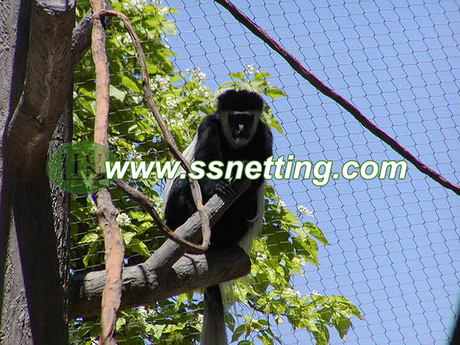
In modern zoos,wildlife reserves, and research and breeding facilities, enclosure fence are no longer simply "isolation facilities," but rather crucial engineering systems that affect animal health, behavioral expression, and management efficiency. Finding a balance between protective strength and behavioral freedom is becoming a core issue in primate enclosure design.
Ⅰ. Understanding the biomechanical characteristics of primates
Primates possess strong grasping abilities, flexible joint structures, and high movement frequencies. During climbing, hanging, and jumping, they exert periodic tensile forces and impact loads on the zoo enclosure mesh. If the mesh material is not strong enough or the knot structure is inadequate, it can easily lead to deformation and fatigue fracture of the fence, and even safety accidents.
Therefore, the scientific design of fishing meshes should be based on the following biomechanical principles:
• Tensile strength and fatigue resistance must be matched:the zoo mesh must withstand repeated stress over a long period to prevent localized failure due to metal fatigue.
• Stable node structure: Woven nodes, welded joints, or rope connections must possess high strength and slip resistance.
• Appropriate balance of elasticity and rigidity: An overly rigid structure may increase the risk of impact on animal joints, while moderate elasticity helps to distribute instantaneous loads.
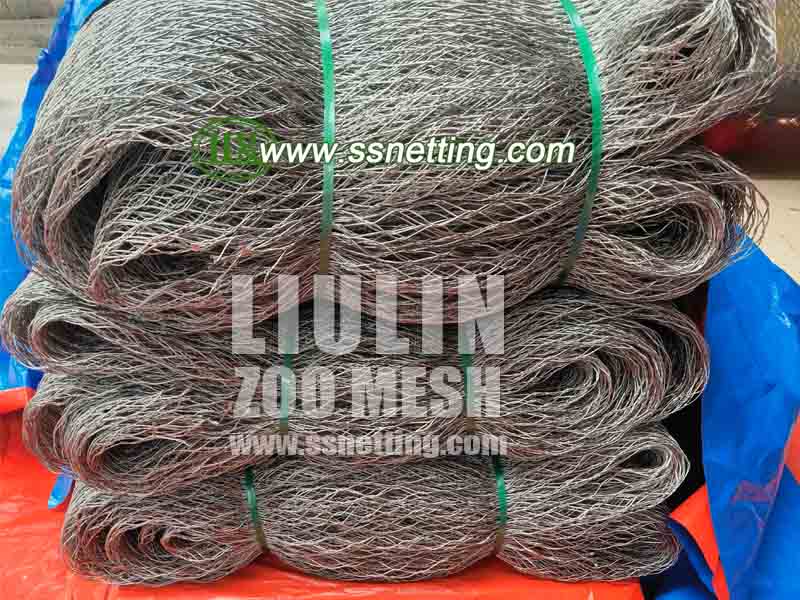
Liulin Company utilizes a high-strength stainless wire mesh and professional rope mesh structure in its primate enclosure systems. By optimizing the wire diameter, weaving method, and frame fixing scheme, the company achieves a good balance between load-bearing capacity and structural stability in its enclosures.
Ⅱ. Security does not equal "isolation."
Modern enclosure designs emphasize "explorability" and "three-dimensional activity space":
• Multi-height structures:Different heights of mesh, rope pathway,and suspended modules simulate a natural tree canopy environment;
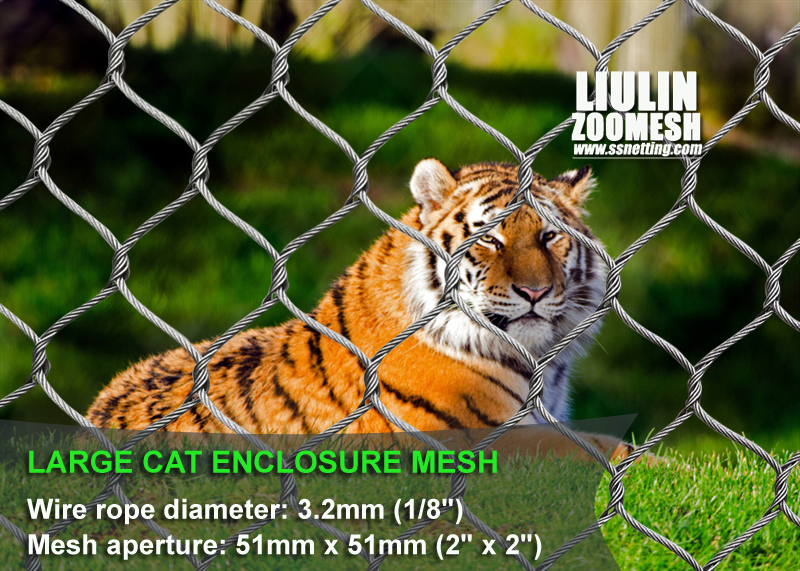
• Optimized mesh size: Prevents escape while allowing animals to grasp and climb, enhancing behavioral diversity;
• Modular add-on structures: Platforms, climbing ropes, and sheltered areas can be integrated to support long-term behavioral enrichment.
The Liulin enclosure system supports a variety of specifications and structural combinations, meeting both containment and isolation requirements while providing animals with diverse three-dimensional movement paths, helping them maintain natural behavioral patterns.
Ⅲ. Engineering Thinking: From "Product" to "System Solution"
Truly high-level primate enclosure design is not simply about choosing a single material or specification, but rather a systematic planning process based on the animal species, activity levels, and the structure of the enclosure space.Liulin Company provides comprehensive solutions, from enclosure selection and structural design to on-site installation, helping clients achieve the optimal balance of safety and functionality in various application scenarios.
Conclusion
By ensuring safety boundaries through engineering design and enhancing freedom of movement through behavioral principles, we achieve a balance between animal safety and behavioral enrichment. Based on its professional metal fencing technology, Liulin Company continuously optimizes animal enclosure solutions, contributing to the development of modern animal management towards a more scientific and humane approach.
 English